Trending...
- Mensa Brings National Board Game Competition to Northern Virginia April 16-19
- Igniting High-Growth Transformation With Launch of XMax AI Subsidiary, Leveraging Global Furniture Dominance to Enter Explosive AI Markets: XMax Inc
- As Global Tensions Rise, Demand Grows for Private Spaces to Process Thoughts and Speak Freely Online
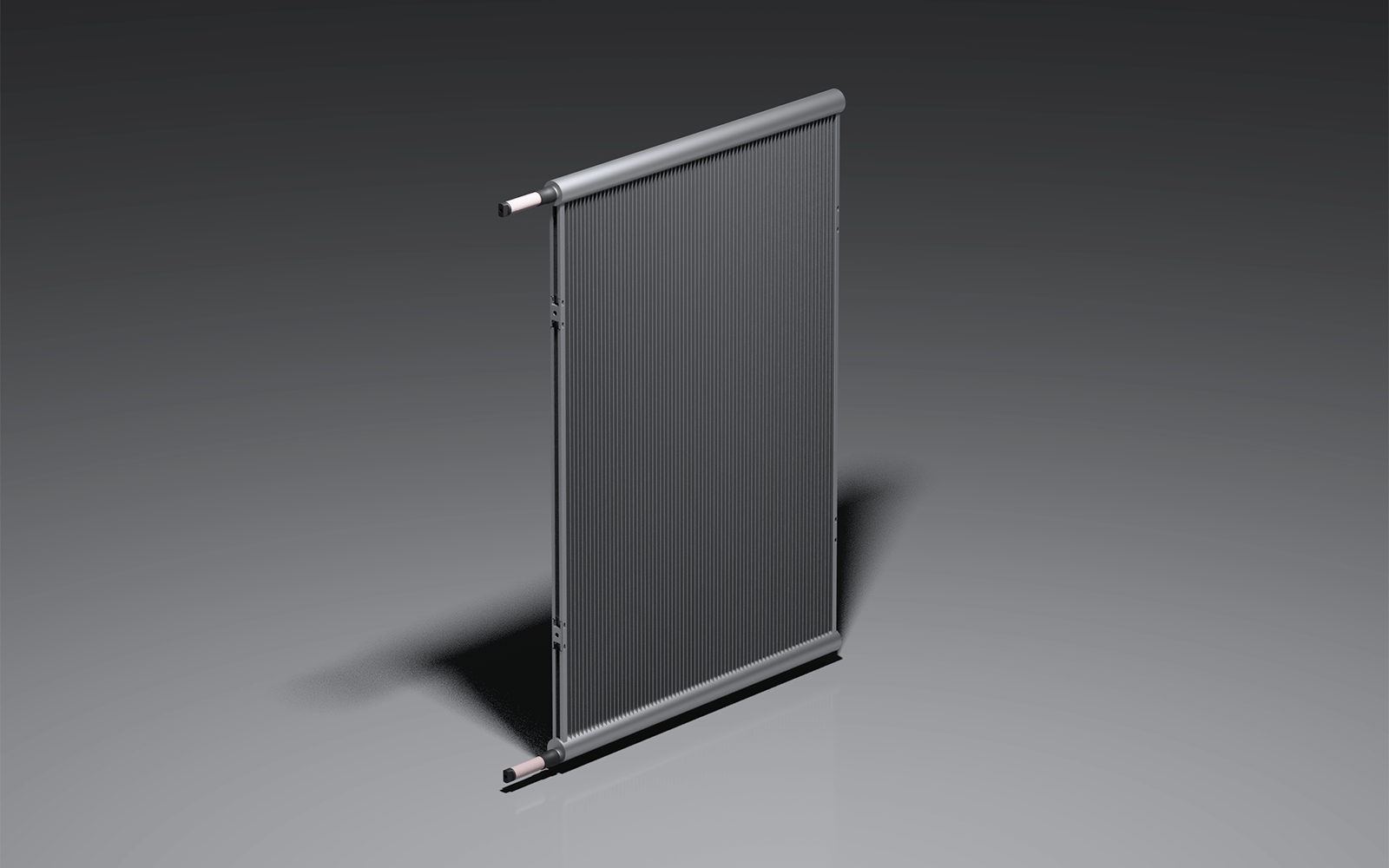

ALTMUNSTER, Austria - nvtip -- Kaltra has announced the development of a new refrigerant distribution technology that significantly improves the performance of microchannel evaporators — one of the most critical components in modern cooling and heat pump systems.
The Challenge: Uneven Refrigerant Flow
In microchannel evaporators, cooling efficiency depends on how evenly refrigerant is distributed across dozens of parallel microchannels. When the refrigerant enters the inlet header in a two-phase state (liquid and vapor), the heavier liquid naturally settles at the bottom while the lighter vapor rises to the top.
This separation causes uneven feeding of the microchannels: some channels receive mostly vapor, others too much liquid. The result is reduced heat transfer efficiency, unstable operation, and significant performance losses.
More on nvtip.com
In practical terms:
The Solution: Downward-Spraying Distributor (DSD)
To address this issue, Kaltra developed a new Downward-Spraying Distributor (DSD) architecture.
Instead of injecting refrigerant sideways inside the header — as in traditional designs — the DSD injects refrigerant vertically downward through precisely calibrated openings. This seemingly simple change produces a powerful effect:
By mechanically disrupting natural phase separation, the DSD ensures that each microchannel receives a more consistent liquid–vapor mixture.
More on nvtip.com
Near-Ideal Performance Achieved
Testing confirmed that evaporators equipped with Kaltra's DSD technology demonstrate performance losses as low as 1–3%, approaching ideal distribution conditions.
The system also maintains high distribution uniformity:
Compared to conventional designs, the DSD concept represents a major improvement in evaporator stability, efficiency, and surface utilization.
Raising the Standard for Microchannel Technology
By solving one of the fundamental challenges of two-phase refrigerant flow inside horizontal headers, Kaltra's new distributor technology sets a new benchmark for microchannel heat exchanger performance.
The development reinforces Kaltra's commitment to advancing thermal management solutions through practical engineering innovation and measurable performance gains.
The Challenge: Uneven Refrigerant Flow
In microchannel evaporators, cooling efficiency depends on how evenly refrigerant is distributed across dozens of parallel microchannels. When the refrigerant enters the inlet header in a two-phase state (liquid and vapor), the heavier liquid naturally settles at the bottom while the lighter vapor rises to the top.
This separation causes uneven feeding of the microchannels: some channels receive mostly vapor, others too much liquid. The result is reduced heat transfer efficiency, unstable operation, and significant performance losses.
More on nvtip.com
- All American Home Renovators: Transforming Bathrooms into Masterpieces, One Home at a Time
- MGM Resorts International Appoints Grant Michael Leingang to Lead Intellectual Property
- Bold Beauty Project Celebrates Anniversary with Collaborative Exhibition at FIU's Miami Beach Urban Studios
- Pacific Emblem Company Launches "Happy 250th Birthday America" Collection and Proud Supporter of the Gary Sinise Foundation
- Bold Beauty Project Announces Exhibition at Palazzo Mora Venice, Italy
In practical terms:
- Evaporators without any internal distributor can lose 25–35% of performance due to severe maldistribution.
- Systems equipped with conventional lateral-spraying distributors typically reduce losses, but still experience 10–15% performance degradation.
The Solution: Downward-Spraying Distributor (DSD)
To address this issue, Kaltra developed a new Downward-Spraying Distributor (DSD) architecture.
Instead of injecting refrigerant sideways inside the header — as in traditional designs — the DSD injects refrigerant vertically downward through precisely calibrated openings. This seemingly simple change produces a powerful effect:
- The downward spray works with gravity rather than against it.
- Liquid refrigerant is actively directed toward the lower region of the header.
- High-velocity jets create turbulence and fine mixing.
- Liquid and vapor phases are blended more evenly before entering the microchannels.
By mechanically disrupting natural phase separation, the DSD ensures that each microchannel receives a more consistent liquid–vapor mixture.
More on nvtip.com
- Financial Educator Jessica Perrone Launches Free "3 Stages of Building Wealth" Course for Women
- Captain Notepad Expands Free Custom Design Services Across Full Product Line
- Sycor Introduces Spring Release 2026 of Sycor.Rental with AI-Driven Innovations and Enhanced Service Processes
- Phinge Corporation Home of Netverse, Announces Exploration of Potential Merger With Nasdaq or NYSE-Listed Special Purpose Acquisition Company (SPAC)
- YOKE Expands NIL Club Into Athlete-Led Commerce With Athlete Merch Launch
Near-Ideal Performance Achieved
Testing confirmed that evaporators equipped with Kaltra's DSD technology demonstrate performance losses as low as 1–3%, approaching ideal distribution conditions.
The system also maintains high distribution uniformity:
- At coil inclination angles up to 30°
- At inlet vapor qualities below 0.4
- Under realistic operating and installation conditions
Compared to conventional designs, the DSD concept represents a major improvement in evaporator stability, efficiency, and surface utilization.
Raising the Standard for Microchannel Technology
By solving one of the fundamental challenges of two-phase refrigerant flow inside horizontal headers, Kaltra's new distributor technology sets a new benchmark for microchannel heat exchanger performance.
The development reinforces Kaltra's commitment to advancing thermal management solutions through practical engineering innovation and measurable performance gains.
Source: Kaltra GmbH
0 Comments
Latest on nvtip.com
- L2 Aviation Appoints Tony Bailey as President and Chief Operating Officer
- Pieter Bouterse Studio Founder to Retire After 40+ Years; Seeks Successor to Continue Legacy
- #WeAreGreekWarriors Opening Reception Packs the House
- Mensa Brings National Board Game Competition to Northern Virginia April 16-19
- Special Alert! Highly Undervalued Stock: $317M Revenue in 2025 for Telecom Leader IQSTEL, Inc. (N A S D A Q: IQST)
- Igniting High-Growth Transformation With Launch of XMax AI Subsidiary, Leveraging Global Furniture Dominance to Enter Explosive AI Markets: XMax Inc
- Acuvance Earns 2026 Great Place to Work® Certification
- As Global Tensions Rise, Demand Grows for Private Spaces to Process Thoughts and Speak Freely Online
- Gingivite Pet Formula Now Available on eBay, Expanding Access to Pet Oral Health Support
- Cryptsoft demonstrates Hybrid-PQC Authentication Token use for quantum-safe systems and infrastructure
- Expert Law Attorneys' Top Law Firms to Know: March 2026
- Green Office Partner Strengthens Global Operations with Mexico-Based DigitalVAAR Partnership
- P-Wave Classics Announces the Publication of The Female Quixote, Volume I, by Charlotte Lennox
- Everwild Music Festival Unveils 2026 Schedule: No Overlapping Sets, Longer Performances, and Epic Late-Night Sets!
- Empowered Ventures Media Group Launches The LaunchHER Lab Where One Female Founder Will Build Her Business With Over $35K in Expert Support
- Riggo Production Studio Launches Monthly Content Package for Growing Brands
- Accelerating into Active Oil Production with over 100 Barrels per day now being produced as Dual-revenue engine begins Generating Cash Flow: $IBG
- Finland emerges as clear Eurovision 2026 favourite – analysis of 12 bookmakers by Vedonlyöntisivut
- Mac Mountain Selects netElastic vRouter for LightCraft Broadband-as-a-Service Platform
- 88% Revenue Growth; Charging Into the Future with Explosive Growth, Strategic EV Expansion and Infrastructure Dominance Signal a Breakout Opportunity